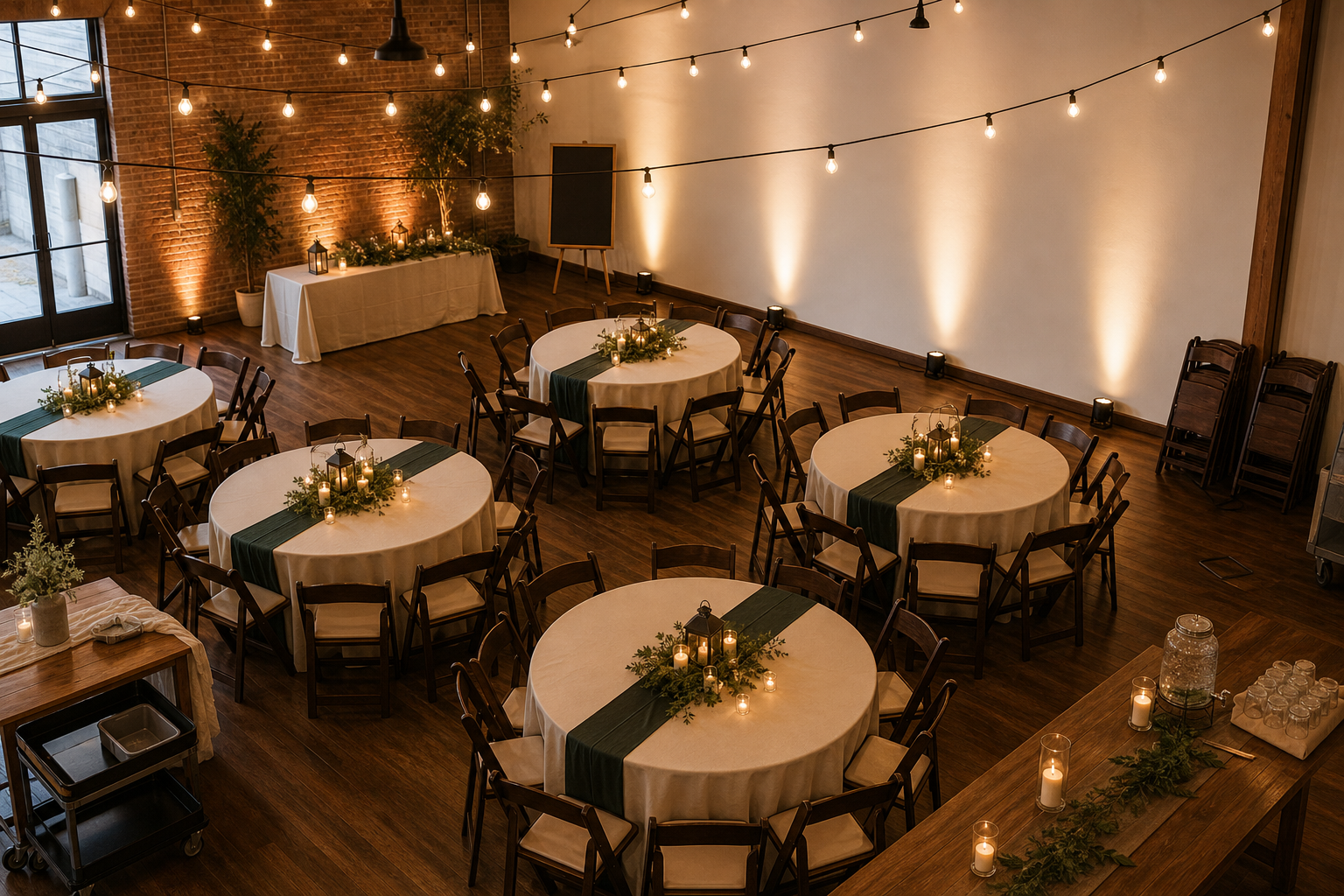
The venues locals actually love rarely top the sponsored results - they surface through the people who have already celebrated there.
Find the right venue in your town today
Browse local venues on Local Eyes and find spaces that real residents actually recommend for your next event.
Start with your guest count and event type
Before you browse a single venue, pin down two numbers: how many people you expect, and what kind of event you are hosting. These two factors determine almost everything else, from the minimum square footage you need to the amenities a venue must offer.
Setup style matters more than most people realize. The same 1,600 square-foot room can hold roughly 133 guests for a seated banquet dinner or about 266 guests for a standing cocktail reception, because standing events require only 6 to 8 square feet per person while a seated dinner with a dance floor needs 12 to 15 square feet. Add a buffet table, a bar station, or a DJ booth and that number shrinks further. Always ask a venue for its comfortable capacity under your specific setup, not just its legal maximum occupancy.
Event type shapes the shortlist just as sharply. A corporate team lunch needs AV equipment and breakout flexibility. A kids' birthday party needs a separate outdoor area and easy cleanup. A milestone dinner needs atmosphere and a private room. Knowing your event type before you call saves everyone time.
The main venue categories and what they suit
Each venue type comes with a different trade-off between atmosphere, flexibility, and cost.
Banquet halls are the most purpose-built option. They typically include tables, chairs, a catering kitchen, and parking, making them well suited to larger celebrations like milestone birthdays and rehearsal dinners. Restaurants with private dining rooms offer a more intimate setting with in-house food and beverage handled for you, ideal for groups of 10 to 40 where the meal is the event. Hotels provide ballrooms for larger gatherings and often bundle catering, AV, and accommodation for out-of-town guests in a single contract.
Rooftop spaces deliver views and a built-in mood, but check noise ordinances carefully: amplified music is commonly capped at 75 decibels measured at 50 feet, which limits how loud your DJ or band can play. Community centers and park pavilions are more flexible on outside vendors and generally sit at the lower end of the rental cost spectrum. Event-specific spaces, think bowling alleys, escape rooms, or cooking studios, do the entertainment heavy lifting and suit smaller, activity-focused groups well.
For events where wine or a winery setting is part of the appeal, local tasting rooms and wineries increasingly offer private event hire alongside their regular programming.
Key contract terms to read before you sign
Venue contracts contain several clauses that catch first-time planners off guard. Understanding them in advance puts you in a much stronger negotiating position.
Rental fee versus minimum spend is the first distinction to clarify. Some venues charge a flat room hire fee; others waive it if you hit a food and beverage minimum. Neither is inherently better, but you need to know which model you are working with before comparing quotes.
Deposit and cancellation terms deserve close attention. A deposit of around 50% is common on signing, and it is frequently non-refundable. Cancellation fees typically range from 25% to 100% of the total rental cost depending on how far in advance you cancel, so read the timeline carefully and consider event insurance to cover the gap.
Also ask about: overtime fees if your event runs long, whether outside caterers or bar vendors are permitted or whether the venue requires exclusive use of its own services, and any noise restrictions that could affect your entertainment choices. These details rarely appear in a venue's marketing materials but always appear in the contract. For events that also involve a ceremony, the wedding venues guide covers additional contract considerations specific to that context.
How to compare shortlisted venues without getting overwhelmed
Once you have three or four candidates, a simple comparison framework stops the process from stalling. Rate each venue on the same fixed list: capacity under your setup style, included amenities, vendor flexibility, parking, accessibility, and contract terms. Gut feel matters too, but it is easier to trust once the practical boxes are checked.
Book earlier than you think you need to. Weekend dates and peak seasons, particularly late spring and early autumn, fill quickly because wedding demand drives competition for the same spaces. Weekday and off-peak bookings can offer more availability and more negotiating room on terms.
Visit in person whenever possible. Photos rarely convey acoustics, natural light, or how a room actually flows when furniture is in place. Bring your approximate table layout sketched on paper and walk the space with that in mind. Ask the venue coordinator what the most common setup mistake is for a group your size. That single question tends to surface the practical constraints no brochure mentions.
For local events happening at venues you are considering, checking the calendar beforehand gives you a real-world sense of how a space performs with a crowd inside it.
Benefits
Recommendations from actual locals
Local Eyes guides are written by residents who know which spaces consistently deliver and which ones look better in photos than in person. Community-sourced recommendations surface venues that generic search results routinely miss.
Curated guides by event type and interest
Rather than sifting through undifferentiated listings, Local Eyes organizes venues by category, including private event spaces, restaurants, and wineries, so you can filter to the type of space that actually fits your event. Interest-specific guides cut the shortlisting time significantly.
Real reviews tied to real listings
Reviews on Local Eyes are connected directly to a venue's listing, which means the context is always clear. Reading reviews alongside a venue's amenities and photos in one place makes comparison far more efficient than cross-referencing multiple platforms.
Local events calendar for venue research
Checking the Local Eyes events calendar lets you see which venues host public events, giving you a live-action view of how a space performs before you commit to a private booking. Seeing a venue in action is the most reliable way to judge its atmosphere and logistics.
Party scenarios and the venues that fit them
Milestone birthday for 60 to 80 guests
A 50th or 60th birthday typically calls for a space that feels special without requiring the full production of a wedding. A banquet hall or hotel ballroom works well here: both offer the capacity for a seated dinner, a dance floor, and a bar, and both handle the logistical load so the host can actually enjoy the evening. Ask specifically about room dividers if the hall is larger than you need, since a cavernous room with 70 people in it can feel sparse. Confirm whether the venue's catering is mandatory or whether you can bring a preferred caterer.
Corporate team event or client dinner
A corporate gathering has different priorities than a personal celebration: AV reliability, breakout flexibility, and a layout that encourages conversation rather than performance. Restaurants with private dining rooms suit client dinners of 10 to 30 people well, because the food quality is built in and the atmosphere is ready-made. For larger team events, hotel conference spaces or dedicated event venues with modular layouts give you more control over the room configuration. Confirm AV setup and Wi-Fi capacity before signing anything.
Kids' birthday party for 20 to 40 children
Children's parties benefit most from venues that contain the chaos rather than resist it. Event-specific spaces like indoor play centers, bowling alleys, or trampoline parks bundle the entertainment, the space, and often the catering into a single package, which dramatically reduces the planning load. Community centers with outdoor access are a strong alternative for warmer months. Check the venue's policy on outside food, particularly birthday cake, since some event-specific spaces require all food to be purchased on-site.
Bridal shower or rehearsal dinner for 20 to 35 guests
These events sit in a sweet spot: intimate enough that atmosphere matters deeply, large enough that a private home feels cramped. A restaurant's private dining room is often the most practical fit, combining a curated menu, attentive service, and a setting that photographs well without requiring decor beyond florals. Wineries with private event spaces are another strong option, particularly for a bridal shower where the setting itself becomes part of the experience. Confirm the minimum spend requirement early, as private dining rooms at popular restaurants often have a food and beverage minimum rather than a flat hire fee.
Best party venues near you: questions answered
Find the right party venue in your town
Local Eyes brings together venue listings, local recommendations, and curated guides by event type, so you can narrow your options with confidence before making a single call. Browse private event spaces, restaurants with private dining, wineries, and more, all organized by town and interest category.